
I need 6-inch (150 mm) silicon wafers with a notch instead of a flat. These wafers will be used as carrier wafers in an ICP plasma etching tool. Standard wafers have flats that interfere with the internal clamping ring.
Silicon Wafers for Plasma Etching
UniversityWafer, Inc. supplies silicon wafers for plasma etching, including carrier wafers, dummy wafers, mechanical-grade wafers, thermal oxide wafers, silicon nitride wafers, and polysilicon-coated substrates for ICP, RIE, DRIE, and other plasma etching systems.
Researchers use these wafers for semiconductor fabrication, MEMS devices, photonics, microfluidics, nanotechnology, and advanced materials research. Standard and custom wafer specifications are available in diameters from 2" to 300 mm.
Research Example: 150 mm Carrier Wafers for ICP Plasma Etching
A postdoctoral researcher requested the following:
Reference #279274 for specifications and pricing.
Many plasma etching laboratories choose our economical mechanical-grade silicon wafers as carrier wafers. One popular option is Item #1196, a 100 mm mechanical-grade wafer frequently used for plasma etching experiments and process development.
Get Your Plasma Etching Quote FAST! Or, Buy Online and Start Researching Today!
Quartz Wafers for Plasma Etching
Single crystal quartz wafers are commonly used in plasma etching systems where exceptional dimensional stability, chemical resistance, and optical quality are required.
A nanotechnology researcher requested information about our 100 mm DSP single crystal quartz wafers for plasma etching channels into quartz and glass substrates.
Typical Specifications
- ST-cut single crystal quartz
- Bow: 20 µm
- Warp: 30 µm
- Surface Roughness (Ra): Approximately 6 Å on the polished surface
Reference #879-1517
Fused Silica Substrates
Fused silica wafers are widely used for plasma etching, optics, microfluidics, and photonic devices because of their excellent optical transmission and thermal stability.
A PhD researcher requested a single-side polished fused silica substrate for plasma etching experiments involving Al₂O₃.
Reference #126647
Plasma Surface Preparation
Prior to thin-film deposition, many substrates require plasma cleaning or sputter etching to improve coating adhesion.
A researcher requested MgF₂ coatings on PMMA substrates and asked about RF plasma cleaning, pulsed plasma etching, and surface preparation before deposition.
UniversityWafer can perform sputter etching before evaporation to improve adhesion for many coating applications.
Reference #169028
Coated Silicon Wafers for Plasma Etching
Many plasma etching processes require coated wafers for process development and selectivity studies.
A chemical engineer requested silicon wafers coated with:
- Silicon Dioxide (SiO₂)
- Silicon Nitride (Si₃N₄)
- Polysilicon
Each coating required approximately 100 nm thickness for plasma etching experiments.
Reference #188124
Dummy Carrier Wafers
Dummy wafers are commonly used as carrier wafers inside ICP and RIE systems when processing small samples, diced chips, fragile substrates, or thin wafers.
An engineering technician requested 4-inch dummy wafers with approximately 2 µm thermal oxide for use as reusable carrier wafers inside plasma etchers.
The carrier wafers support small samples while the robotic wafer handler transfers them safely into and out of the plasma etching chamber.
Reference #215104
Why Use Carrier Wafers?
- Support thin or fragile substrates
- Improve wafer handling during plasma etching
- Increase thermal uniformity
- Improve vacuum chuck performance
- Reduce substrate damage
- Often reusable for multiple process cycles
UniversityWafer supplies carrier wafers, dummy wafers, mechanical-grade silicon wafers, oxide-coated wafers, quartz, fused silica, sapphire, and many other substrates used in plasma etching research and semiconductor manufacturing.
What Is Plasma Etching?
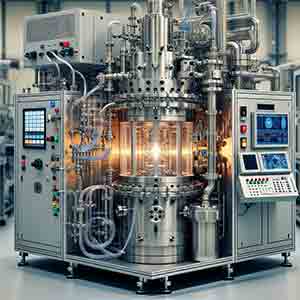
Plasma etching is a dry etching process used to selectively remove material from the surface of a semiconductor wafer. It is one of the most important fabrication techniques used to manufacture integrated circuits (ICs), MEMS devices, photonic components, sensors, power electronics, and advanced semiconductor devices.
Unlike wet chemical etching, plasma etching uses reactive gases that are ionized inside a vacuum chamber. These energetic ions and reactive radicals remove material with excellent precision while producing highly anisotropic sidewalls that are essential for modern microfabrication.
How Plasma Etching Works
- Gas Introduction
Reactive gases such as SF6, CF4, CHF3, Cl2, BCl3, O2, or Ar are introduced into a vacuum chamber. - Plasma Generation
RF power ionizes the gases to create plasma containing ions, electrons, radicals, and reactive species. - Material Removal
Reactive particles chemically and physically remove exposed material from the wafer while masking layers protect areas that should remain intact. - Pattern Transfer
The plasma accurately transfers lithographically defined patterns into silicon, dielectric, metal, or compound semiconductor layers.
Advantages of Plasma Etching
- Excellent dimensional control
- High aspect ratio structures
- Anisotropic vertical sidewalls
- Excellent repeatability
- Minimal undercutting
- Compatible with advanced semiconductor manufacturing
- Suitable for MEMS, photonics, and nanotechnology fabrication
Common Substrates Used for Plasma Etching
UniversityWafer supplies numerous substrates used in plasma etching, reactive ion etching (RIE), and inductively coupled plasma (ICP) processing.
- Silicon – the most common substrate for integrated circuits and MEMS devices.
- Silicon Dioxide (SiO₂) – dielectric layers, masking, and insulation.
- Silicon Nitride (Si₃N₄) – hard masks and protective films.
- Polysilicon – gate structures and MEMS fabrication.
- Gallium Arsenide (GaAs) – RF, microwave, and optoelectronic devices.
- Sapphire – LEDs, optical devices, and GaN growth.
- Silicon Carbide (SiC) – power electronics and high-temperature devices.
- Glass, Quartz, and Fused Silica – microfluidics, optics, and sensor fabrication.
Carrier Wafers for ICP Plasma Etching
Many plasma etching systems require carrier wafers when processing small samples, thin substrates, or fragile devices. Carrier wafers improve wafer handling, thermal contact, vacuum chucking, and process uniformity throughout the etching cycle.
Research Example
A quantum computing laboratory requested 2–4 carrier wafers for use inside an ICP plasma etching system. Because the wafers served only as carriers, a wide range of specifications was acceptable as long as the wafers were conductive, flat, and consistent from wafer to wafer.
Reference #165260
Typical Plasma Etching Applications
- Integrated circuit fabrication
- MEMS manufacturing
- Microfluidic device fabrication
- Power semiconductor devices
- Optoelectronic components
- Photonics and waveguides
- Quantum device research
- Nanotechnology research
- Surface preparation before thin-film deposition
UniversityWafer Supplies Plasma Etching Substrates
UniversityWafer, Inc. supplies mechanical-grade silicon wafers, dummy wafers, carrier wafers, thermal oxide wafers, silicon nitride wafers, polysilicon-coated wafers, quartz, fused silica, sapphire, SiC, and many other semiconductor substrates for plasma etching, reactive ion etching (RIE), deep reactive ion etching (DRIE), and ICP etching research.