
Glass Wafers for Pressure Sensor Applications
Glass wafers are widely used as substrates for MEMS pressure sensors, silicon-glass bonded devices, and wafer-level packaging. Their excellent electrical insulation, chemical resistance, thermal stability, and mechanical strength make them an ideal material for high-performance pressure sensing applications.
UniversityWafer, Inc. supplies research-grade glass wafers in a variety of materials, diameters, thicknesses, and surface finishes for pressure sensor development, MEMS fabrication, and semiconductor packaging.
Common Applications of Glass Pressure Sensors
- Automotive tire pressure monitoring systems (TPMS)
- Petroleum and oil & gas pressure monitoring
- Medical devices and blood pressure sensors
- Smartphones, tablets, and wearable electronics
- GPS and altitude measurement systems
- Industrial automation and process control
- Aerospace and environmental monitoring
- MEMS and microfluidic devices
Benefits of Glass Wafers
Compared to many other substrate materials, glass wafers provide outstanding corrosion resistance, excellent electrical insulation, low thermal expansion, and compatibility with anodic bonding and other wafer bonding techniques. Glass substrates can also be etched, drilled, polished, and fabricated with cavities or through-glass vias for advanced MEMS sensor packaging.
- Excellent electrical insulation
- High chemical and corrosion resistance
- Stable performance over wide temperature ranges
- Compatible with silicon-glass anodic bonding
- Available in custom diameters, thicknesses, and glass types
- Ideal for wafer-level packaging and MEMS fabrication
Get Your Glass Wafer Quote FAST! Or, Buy Glass Wafers Online and Start Researching Today!
Need Custom Glass Wafers?
Whether your project requires Borofloat®, Pyrex®, fused silica, quartz, D263, or soda lime glass wafers, UniversityWafer, Inc. can help source standard and custom substrates for pressure sensors, MEMS devices, biomedical instruments, optical components, and semiconductor research.
What Are Glass Pressure Sensors?
Glass pressure sensors are devices used to measure pressure in medical, automotive, industrial, aerospace, and consumer electronics applications. Glass is often selected for pressure sensor substrates because it provides chemical resistance, dimensional stability, electrical insulation, and good performance in harsh environments.
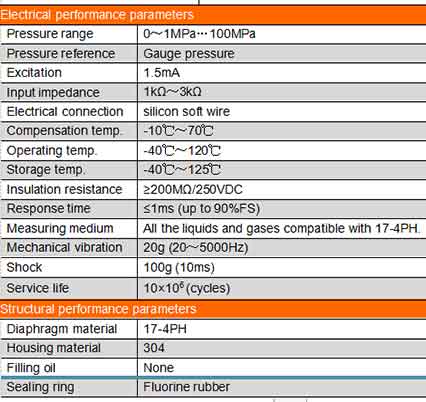
In many MEMS pressure sensor designs, a glass wafer is bonded to a silicon wafer to create a stable cavity, support structure, or insulating base. This silicon-glass structure can help protect the sensing element while allowing accurate pressure measurement.
Why Use Glass Wafers for Pressure Sensors?
Glass wafers for pressure sensor applications are used because they are stable, corrosion resistant, electrically insulating, and compatible with many MEMS fabrication processes. Glass can be patterned, etched, bonded, diced, and integrated with silicon sensor dies for wafer-level packaging.
- Good chemical and corrosion resistance
- Electrical insulation for sensor packaging
- Compatibility with silicon-glass anodic bonding
- Useful for MEMS cavities and diaphragm support structures
- Available in many diameters, thicknesses, and glass types
- Suitable for medical, automotive, industrial, and harsh-environment sensors
Glass Wafer Bonding for MEMS Pressure Sensors
Many MEMS pressure sensors use silicon-glass bonding to create sealed cavities under the pressure sensing diaphragm. This bonding method can support wafer-level packaging, improve mechanical stability, and help protect sensitive microstructures. Depending on the design, the glass may serve as a carrier wafer, cap wafer, insulating layer, or package substrate.
Common glass materials used in MEMS and pressure sensor fabrication include Borofloat 33, Pyrex glass, D263 glass, fused silica, and soda lime glass.
Pressure Sensor Applications
Glass pressure sensor substrates are used in many applications where accurate pressure measurement, long-term reliability, and stable packaging are important.
- Medical devices: Blood pressure sensors, catheters, diagnostic equipment, and implantable sensor research
- Automotive systems: Tire-pressure monitoring, manifold pressure sensors, braking systems, and engine monitoring
- Industrial equipment: Fluid pressure monitoring, process control, robotics, and automation systems
- Consumer electronics: Smartphones, wearables, GPS devices, and barometric pressure sensors
- Oil and gas: Petroleum pressure monitoring and harsh-environment sensing
- Aerospace: Altitude, air pressure, and environmental monitoring systems
Structure of Glass Pressure Sensors
A typical glass pressure sensor may include a silicon diaphragm, a bonded glass base, a sealed cavity, and electrical connections to measure diaphragm deflection. When pressure changes, the diaphragm moves. This movement is converted into an electrical signal through piezoresistive, capacitive, optical, or resonant sensing methods.
Glass substrates can also be patterned with cavities, vias, channels, or through-glass features to support wafer-level packaging and sensor integration. These features are useful when fabricating compact MEMS pressure sensors with improved protection and repeatability.
Glass Diaphragms, Cavities, and Wafer-Level Packaging
Glass wafers can be used to form diaphragms, support layers, protective caps, and cavities for pressure sensor devices. In wafer-level packaging, sensor dies can be sealed before dicing, helping improve throughput and reduce handling damage. This approach is useful for MEMS pressure sensors, optical sensors, accelerometers, gyroscopes, and microfluidic devices.
Choosing Glass Wafers for Pressure Sensor Research
When selecting a glass wafer for pressure sensor fabrication, researchers should consider the glass type, diameter, thickness, surface quality, coefficient of thermal expansion, bonding method, and whether the wafer requires drilled holes, cavities, etched features, or custom dicing.
- Glass type: Borofloat, Pyrex, D263, fused silica, quartz, or soda lime
- Diameter: Common wafer sizes include 2", 3", 4", 100mm, 150mm, and larger
- Thickness: Selected based on bonding, packaging, and mechanical requirements
- Surface finish: Single-side polished or double-side polished
- Features: Cavities, holes, channels, diced pieces, or custom shapes
- Application: MEMS, medical, automotive, industrial, or harsh-environment pressure sensing